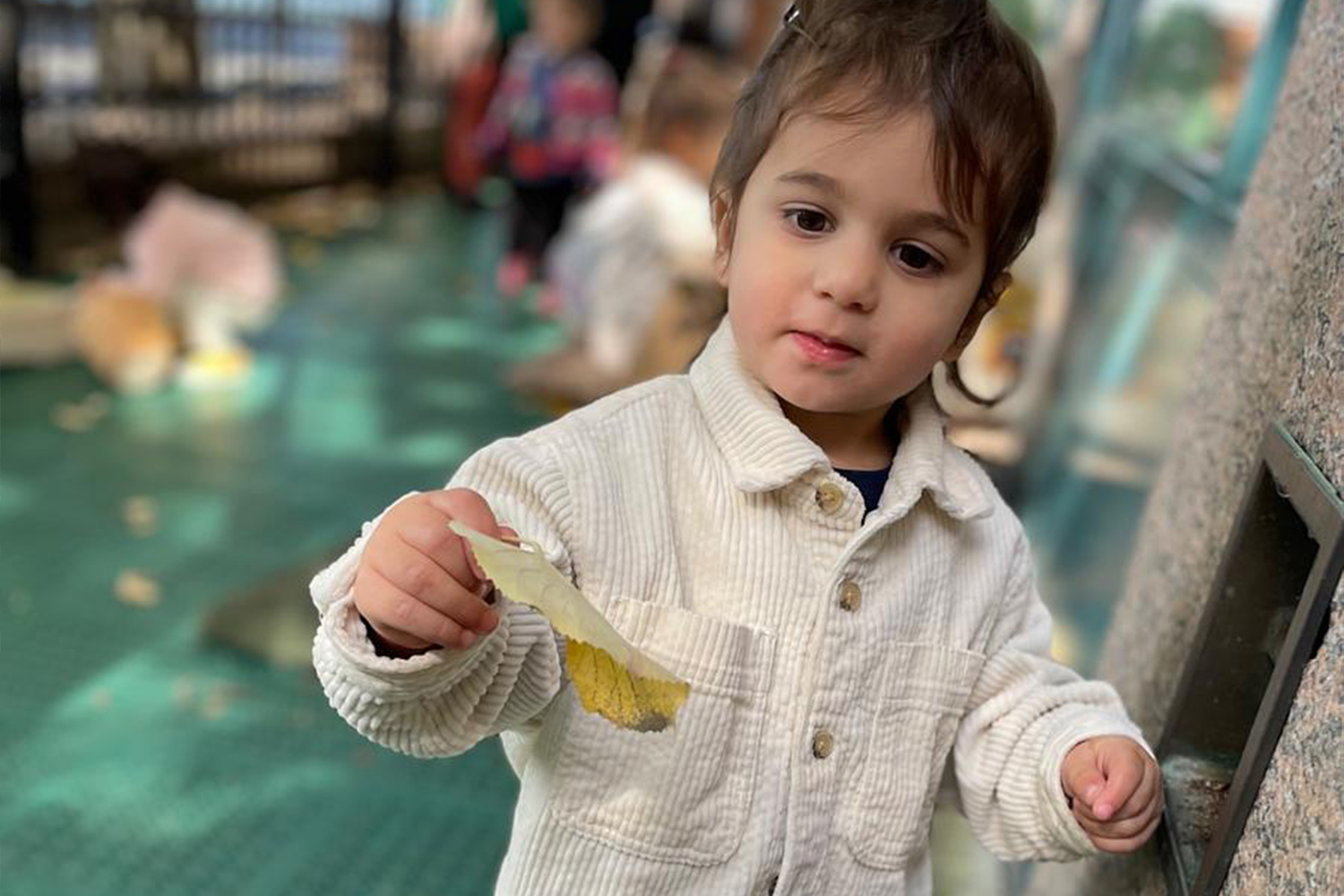


Nursery 2s
A trilingual Montessori classroom for two-year-olds who are developing stronger language, greater physical control, a clear desire for independence, and a growing awareness of other people.
Introduction
Nursery Twos is an important early school experience. Battery Park Montessori creates a warm, engaging environment where children feel secure, capable, and excited to participate, nurturing a genuine love of school from the start. Predictable routines and attentive relationships help children grow comfortable in classroom life, while teachers give them time to practice emerging skills at their own pace.
At two, children’s language, coordination, curiosity, and awareness of others are rapidly expanding. Practical Life activities, language-rich interactions, and thoughtfully chosen materials invite them to carry, pour, sort, build, communicate, make choices, and complete familiar sequences. English, Mandarin, and Spanish are present throughout the day, supporting early communication as children develop concentration, confidence, independence, and a growing sense of belonging.
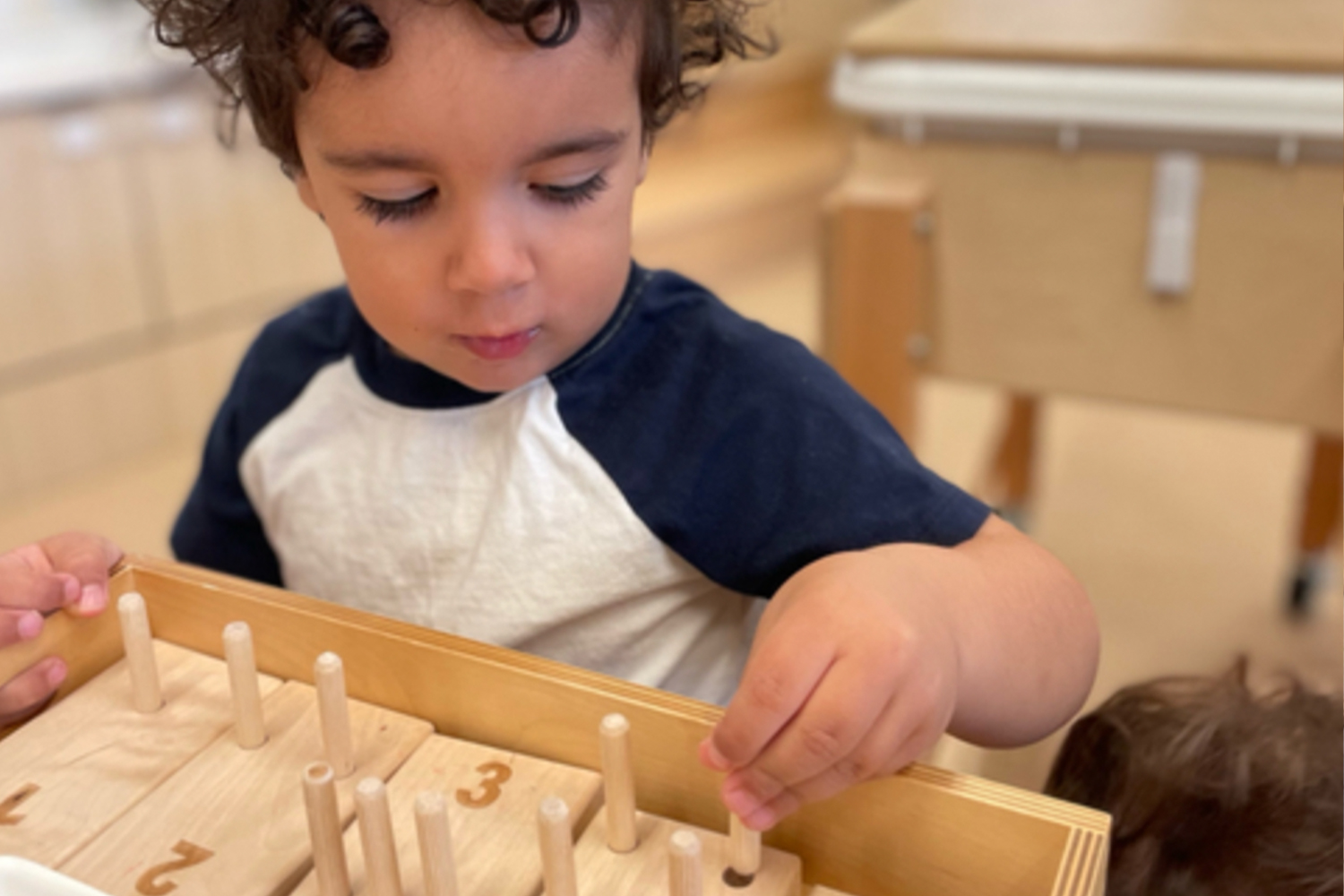
Partnering With Families
Families are a child’s first and most important teachers. We stay closely connected through classroom updates in Brightwheel, learning documentation in Transparent Classroom, and three scheduled family-teacher meetings each year. Teachers use these platforms to share observations, photos, and meaningful moments while keeping their attention on children during the school day.
Families are also invited into classroom life. Parents may visit classrooms, volunteer on field trips, and join Work With Me sessions at scheduled times throughout the year. During these sessions, parents come at the beginning or end of the day to work alongside their child in the classroom.
Trilingual Immersion
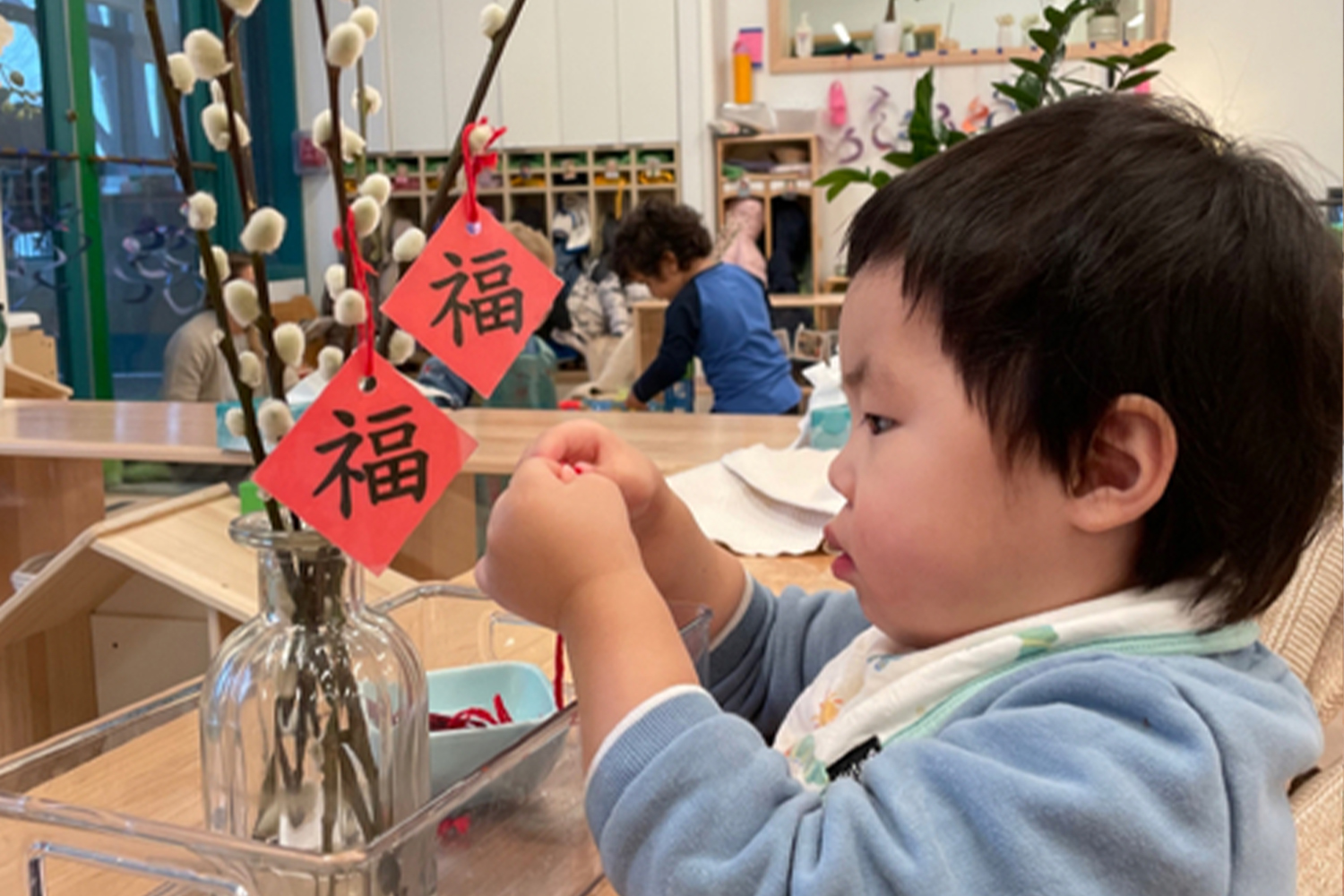
Each Nursery Twos classroom includes Montessori-trained teachers who use English, Mandarin, and Spanish. Each teacher consistently uses one designated language, helping children connect all three languages with familiar people, objects, actions, and experiences throughout the day.
As two-year-olds’ language and communication skills expand, they encounter each language through songs, stories, routines, conversation, and play. This consistent, meaningful exposure encourages listening, understanding, new vocabulary, and joyful participation while building a strong foundation for continued language learning.
Our Montessori Approach
Montessori shapes both the classroom environment and the rhythm of the day. As two-year-olds develop greater coordination and independence, they begin taking on more complex, multi-step activities. They pour, spoon, wipe, sweep, wash, carry, prepare simple foods, and care for their belongings and shared classroom materials. Each activity is presented as a clear, understandable sequence using tools sized for small hands, with time for children to choose, repeat, practice, and build mastery at their own pace.
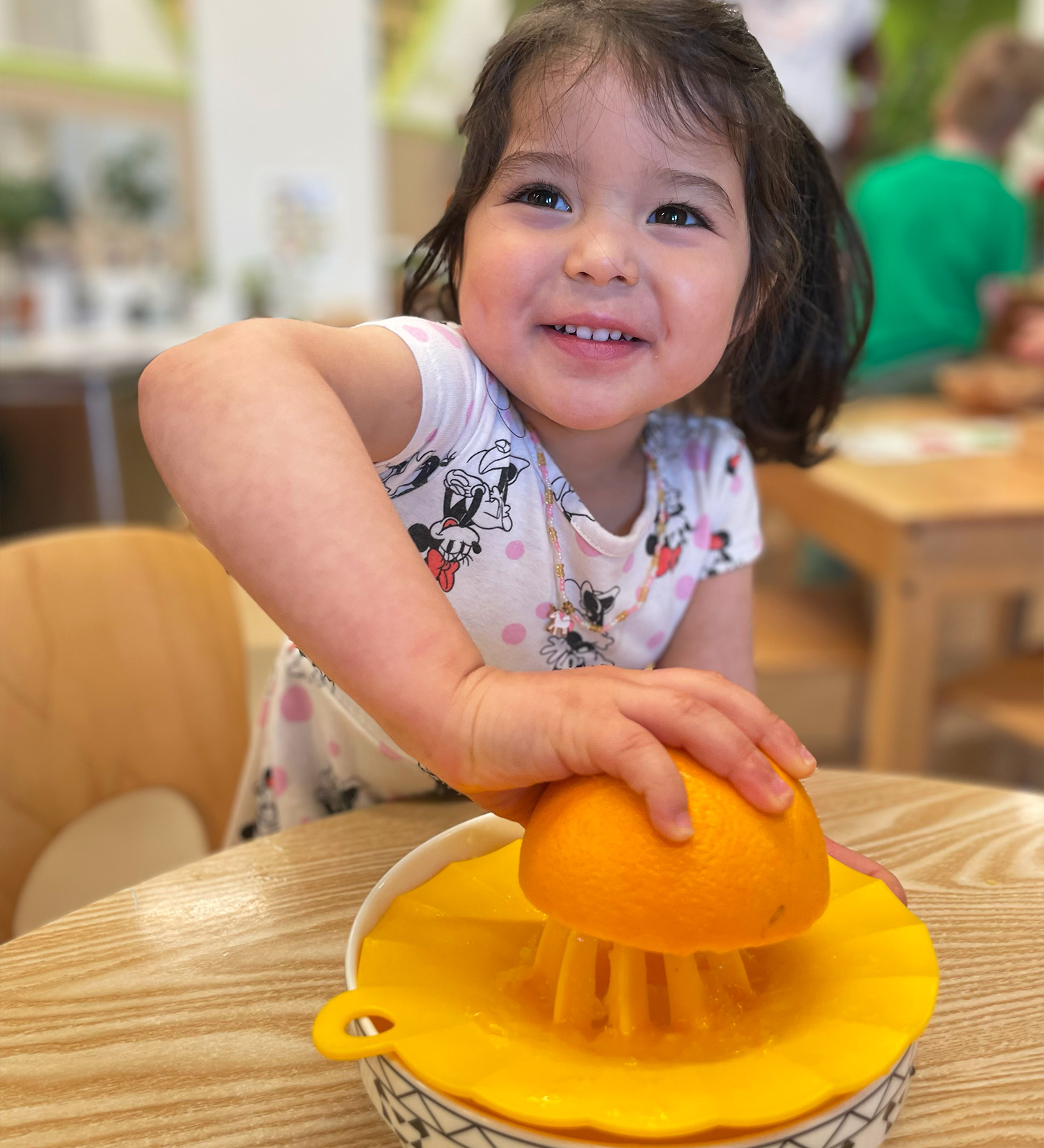
Practical Life strengthens hand control, coordination, order, and concentration while helping children take an active role in classroom life. For example, Nursery Twos squeezed fresh oranges to prepare juice for a special tea ceremony, then welcomed their Nursery Ones friends as guests. The experience gave them a meaningful opportunity to practice new skills, contribute to a shared occasion, and build connections within the school community. Classroom and outdoor experiences also support larger movements as children walk, run, climb, balance, carry, and navigate shared spaces with increasing control and confidence.
Social-Emotional Learning
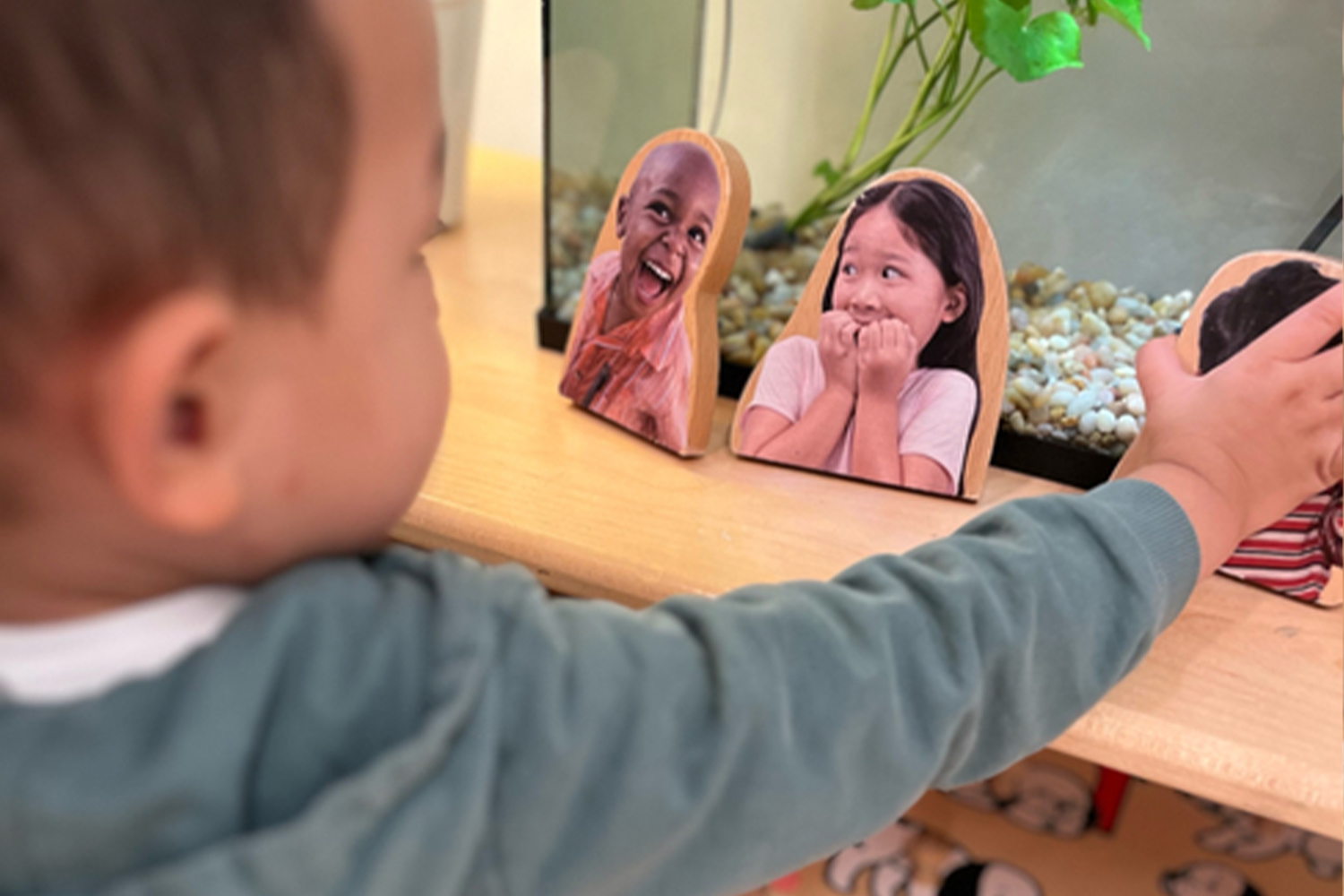
As two-year-olds’ language and awareness of others expand, they become increasingly able to express their needs, recognize emotions, build relationships, take turns, share space, and participate in a group. Teachers model clear language and respectful behavior, helping children communicate, work through moments of frustration, and approach early social experiences with growing confidence.
Grace and courtesy are woven throughout the day. Through everyday routines and interactions, children practice greeting others, waiting for a turn, offering help, caring for shared materials, and contributing to the classroom. These experiences nurture kindness, empathy, respect, responsibility, and a growing sense of belonging.
Sample Schedule
Each day balances active learning, social interaction, and quiet reflection. Children move through free play and the daily work cycle, circle time, inquiry-based learning, outdoor exploration, rest, and creative expression. Family-style lunch gives children time to talk, practice independence, and build community.
Next Step: Preschool & Kindergarten (Casa)
Nursery Ones
A gentle first school experience helps children build trust, coordination, and growing independence through hands-on Montessori work and early exposure to English, Mandarin, and Spanish.
Explore Nursery Ones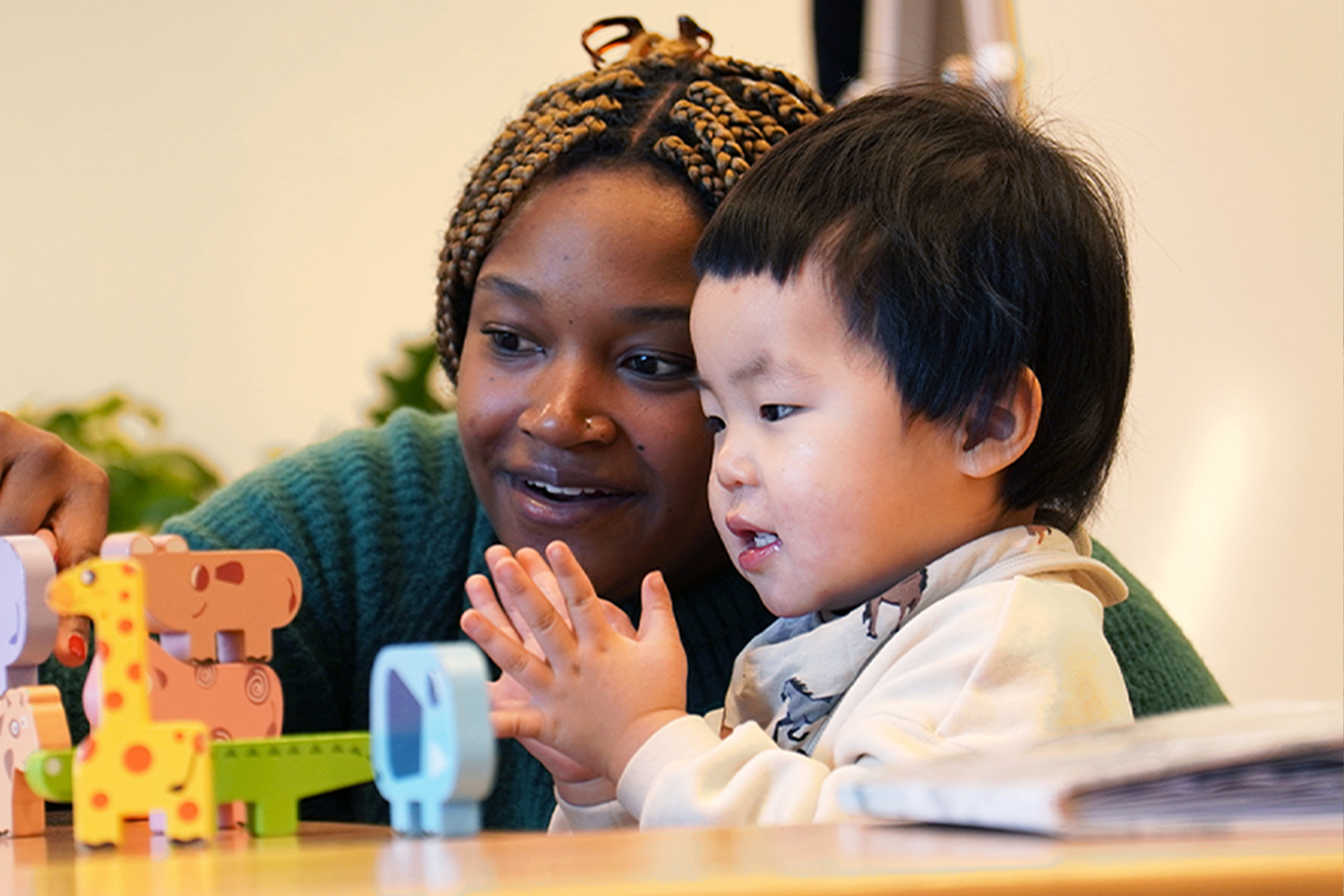
Nursery Twos
Nursery Twos builds on children’s growing language, coordination, and independence through purposeful Montessori work and daily experiences in English, Mandarin, and Spanish.
Explore Nursery Twos
Preschool & Kindergarten
In the mixed-age Casa classroom, children ages 3 through 5 follow an increasingly complex Montessori curriculum while learning in English, Mandarin, and Spanish.
Explore Preschool & Kindergarten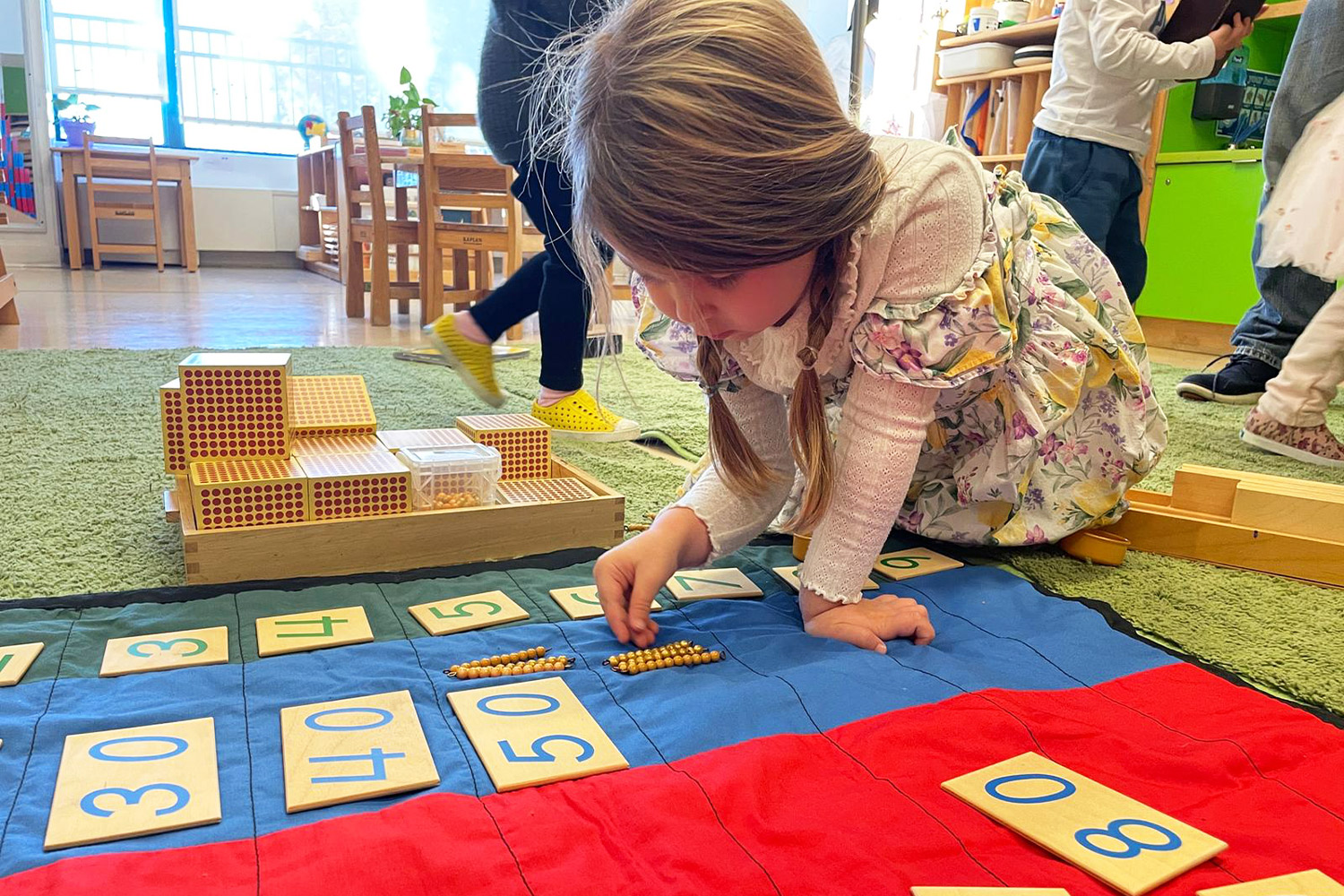
Exmissions Support
Individual guidance helps families understand New York City school options, build a thoughtful school list, and navigate the application process as their child prepares for what comes next.
Explore Exmissions Support
Nursery Ones begins at approximately 12 months and places particular emphasis on trust, secure relationships, movement, sensory exploration, and early communication. Nursery Twos builds on that foundation with growing independence, language, practical life, self-care, social development, and more sustained purposeful work.
Nursery serves children in the Ones and Twos age groups, beginning at approximately 12 months. Eligibility is determined using BPM’s December 31 age cutoff; families should use the current Age Cutoffs page for the exact date-of-birth ranges for their entry year.
At this age, those ideas are not separate. Children build early academic, social, physical, and emotional foundations through movement, repetition, exploration, language, purposeful Montessori work, and play.
Yes. Early Care is available Monday–Friday from 8:00–8:30 a.m. Extended Day is available for Nursery Ones from 2:30–5:30 p.m. and for Nursery Twos and Casa from 2:30–6:00 p.m. Optional enrichment classes are also available for Nursery Twos and Casa.