

Montessori
A purposeful, child-centered approach that builds independence, concentration, confidence, and a lifelong love of learning.
The Montessori Foundation
Developed more than a century ago by Dr. Maria Montessori, an Italian physician and educator, Montessori is an educational approach based on careful observation of how children naturally learn. It recognizes children as capable participants in their own development and gives them time to learn through movement, hands-on experience, and purposeful activity.
In practice, a Montessori classroom is designed at the child’s scale. Materials are arranged in sequence on low, open shelves, furniture is child-sized, and children can choose from work a teacher has introduced, carry it to a table or rug, and return it when finished. Child-led learning means children have meaningful choices within clear limits. Teachers prepare the environment, give individual and small-group lessons, observe each child’s progress, and guide them toward the next appropriate challenge.
Battery Park Montessori is an American Montessori Society (AMS) Verified School, and Montessori is the foundation of every classroom from Nursery Ones through Kindergarten. Through this approach, children develop a sense of order, coordination, concentration, independence, and confidence while building strong academic foundations.
The Principles That Guide Us
A Continuous Path from Nursery Through Kindergarten
Nursery Ones children begin with trust, gross motor skills, sensory exploration, early communication, and manageable acts of self-care. Nursery Twos build greater coordination, expressive language, independence, and participation in classroom routines.
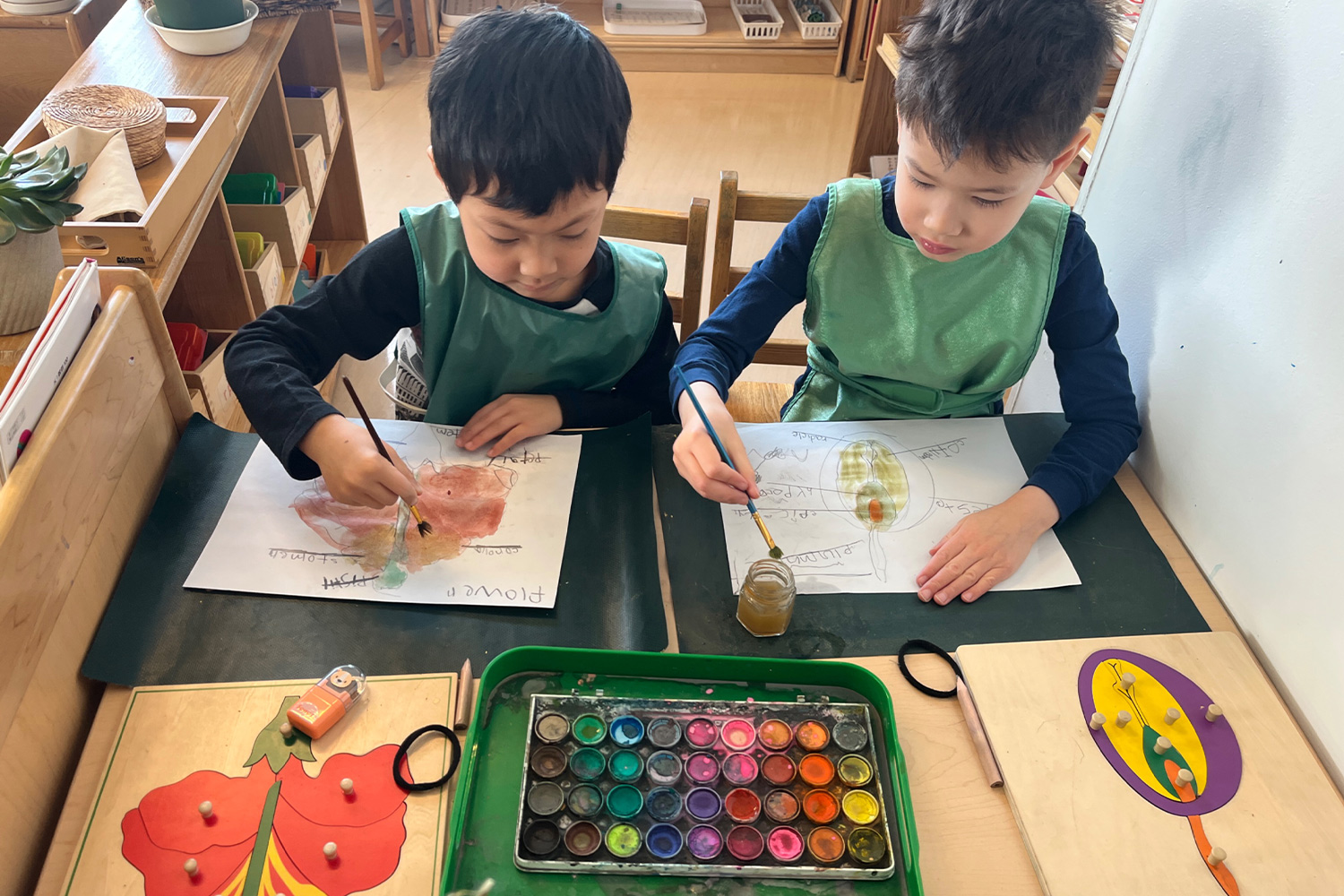
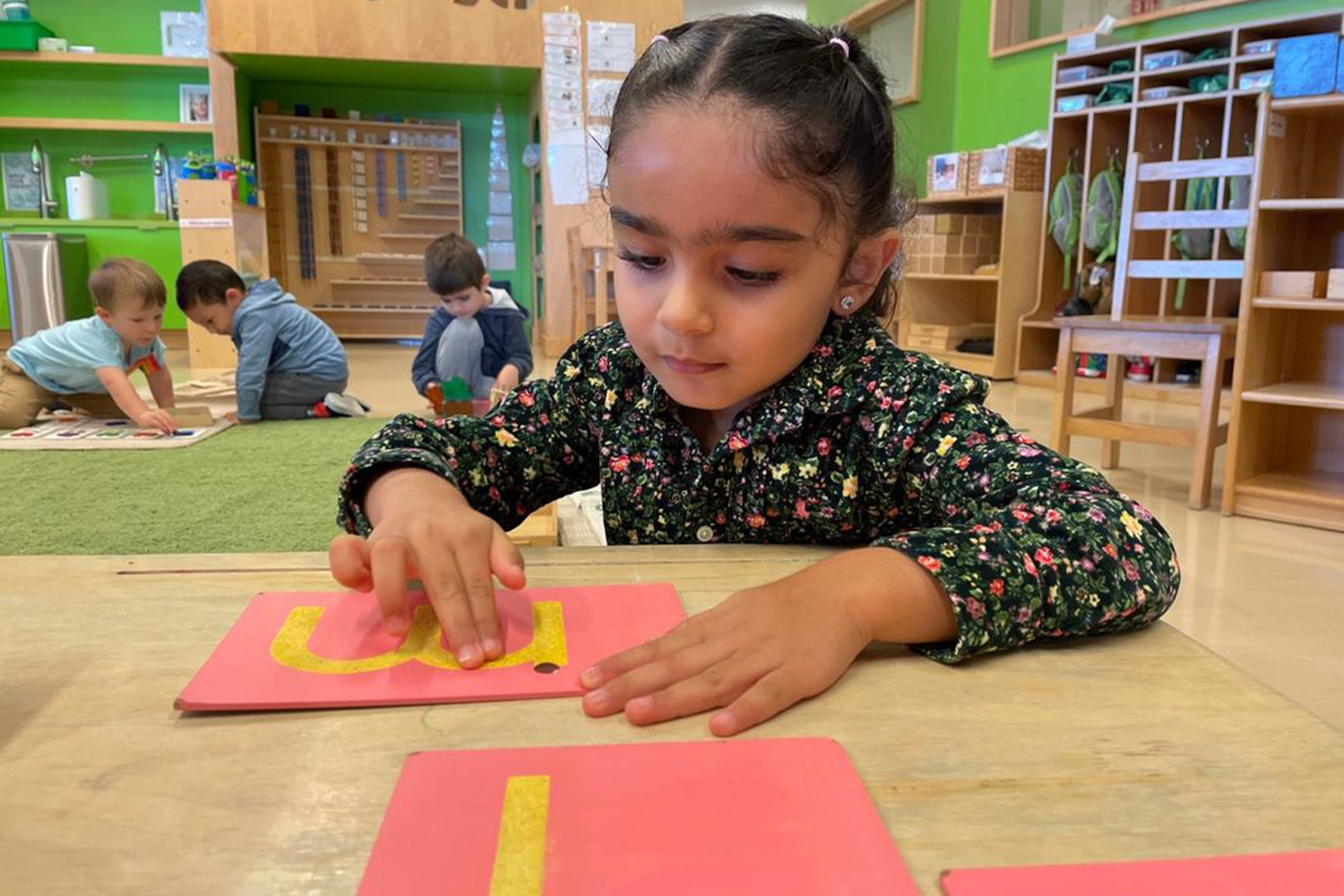
In Preschool & Kindergarten (Casa), children ages 3 through 5 work within a wider academic sequence that includes Practical Life, Sensorial Learning, Mathematics, Language and Literacy, and Cultural Studies. The mixed-age Casa classroom is a central element of Montessori education. Younger children learn by observing more experienced classmates, while older children deepen their own understanding by modeling skills and offering help, strengthening their leadership, empathy, and ability to mentor others.
The materials and expectations change as children grow. Because progress is individualized, children who show readiness for more advanced work are introduced to increasingly complex materials with guidance from their Montessori teachers. The underlying habits remain consistent: choosing with purpose, working carefully, caring for the environment, and taking increasing responsibility for learning.
Yes. Montessori is the foundation of the program from Nursery Ones through Casa. Classrooms are thoughtfully prepared with authentic Montessori materials, and Battery Park Montessori maintains more than one Montessori-trained teacher per classroom.
A prepared environment is a calm, orderly, child-centered classroom designed to invite independence and purposeful exploration. Materials are intentionally arranged and sequenced so children can make choices, repeat meaningful work, build concentration, and gradually take greater responsibility for themselves and their environment.
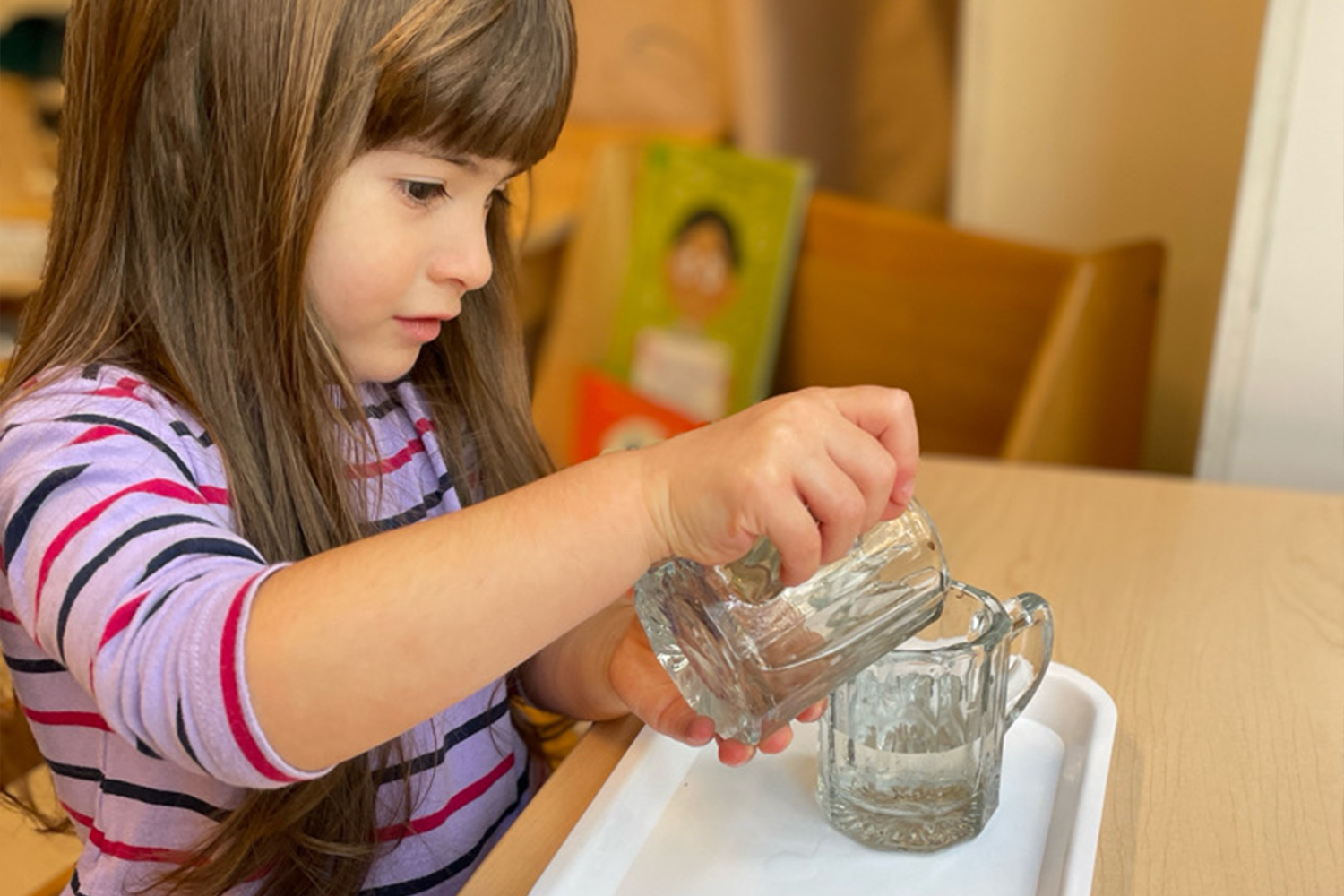
Practical Life includes purposeful everyday activities such as pouring, spooning, washing, food preparation, tending plants, dressing, and caring for the classroom. These experiences help children develop coordination, concentration, independence, confidence, and responsibility.
At Battery Park Montessori, work and play are closely connected. Montessori educators use the word “work” because a child’s activity deserves to be taken seriously, even when it looks like play to an adult. As Dr. Maria Montessori explained, “The greater part of what you call ‘play’ is really work.”
When children stack and knock down blocks, repeat a pouring activity, or move a toy across the carpet again and again, they are exploring how the world works while developing coordination, concentration, independence, and confidence. If an activity holds a child’s attention, it has meaning for them. Teachers respect that engagement, observe carefully, and give children the time and space to follow it.
Grace and Courtesy are woven into daily life at Battery Park Montessori. Children practice kindness, empathy, peaceful problem-solving, self-regulation, responsibility, and care for others and their shared environment.